What is Social Media Marketing? 2026 Beginner's Guide
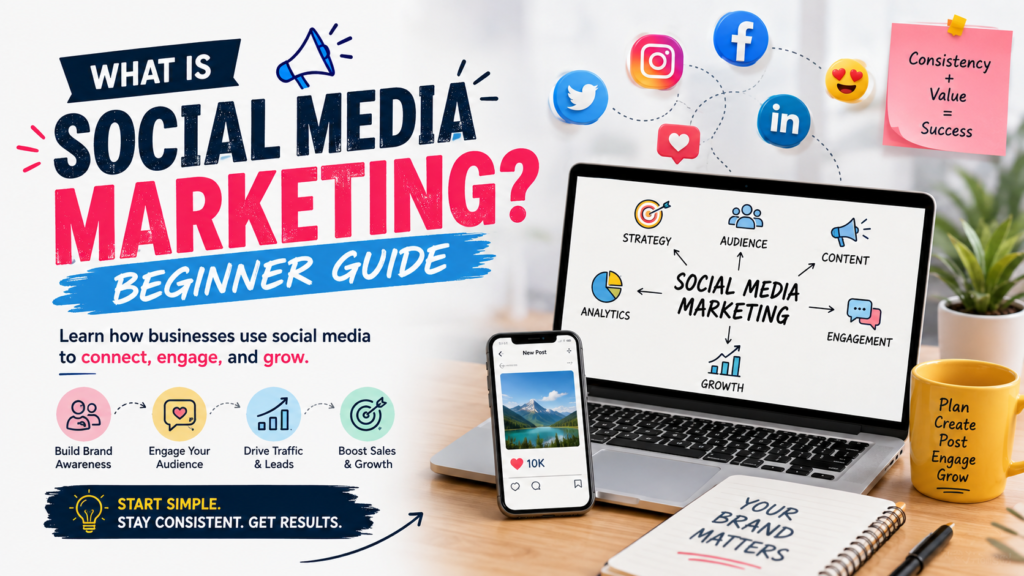
Table of Contents
Social media has changed the way businesses connect with customers. Today, a brand can reach potential buyers, build trust, answer questions, and promote products without relying only on traditional advertising. But what is social Media marketing, and how does it actually help a business grow?
In simple terms, social media marketing is the process of using social platforms to promote a brand, connect with an audience, share valuable content, and achieve marketing goals. These goals may include increasing awareness, generating leads, driving website traffic, or increasing sales.
Moreover, businesses can use organic content, paid advertising, influencer collaborations, and community engagement as part of their strategy. Therefore, social media marketing is not simply about posting pictures or videos. It is about creating meaningful connections with the right audience.
What Is Social Media Marketing?
Social media marketing involves using platforms such as Instagram, Facebook, YouTube, LinkedIn, Pinterest, and TikTok to communicate with an audience.
A business can create content that informs, entertains, inspires, or helps its followers. At the same time, it can use social platforms to understand what customers want and how they respond to different messages.
For example, a clothing brand might share styling videos on Instagram. A software company could publish educational videos on YouTube. Similarly, a B2B company might use LinkedIn to share industry insights and generate business leads.
The main purpose is to connect content with business objectives.
How Does Social Media Marketing Work?
A successful campaign usually follows a simple process:
- Define a goal: Decide what you want to achieve.
- Understand the audience: Learn about customers, their interests, and their problems.
- Choose suitable platforms: Focus on channels where your audience is active.
- Create useful content: Publish content that provides genuine value.
- Engage with followers: Reply to comments, questions, and messages.
- Measure performance: Track results and identify what works.
- Improve the strategy: Use the data to make better decisions.
Therefore, social media marketing combines content creation, communication, advertising, and performance analysis.
Why Is Social Media Marketing Important?
Social platforms give businesses another way to reach people where they already spend time online. However, simply having an account is not enough.
A strong strategy helps a business communicate consistently and build recognition over time.
1. Builds Brand Awareness
First, social media can help people discover your brand.
Regularly sharing useful and recognizable content makes it easier for customers to remember your business. Consequently, your brand can become more familiar to people who may need your products or services later.
2. Builds Customer Relationships
Social media is also a communication channel.
Customers can comment on posts, send direct messages, ask questions, and share feedback. Therefore, businesses have an opportunity to create two-way conversations instead of only sending advertisements.
3. Drives Website Traffic
Social content can also encourage people to visit your website.
For example, a business can share a blog article, product page, service page, or landing page through social posts. Google Analytics can help businesses understand where website visitors come from and how different traffic sources perform.
4. Supports Lead Generation
Social media can help businesses attract potential customers.
A company may use educational content, lead forms, offers, webinars, or downloadable resources to encourage users to take the next step.
However, the content should focus on solving a customer problem rather than constantly promoting a product.
5. Helps Increase Sales
When awareness, trust, and engagement grow, social media can contribute to sales.
For example, product demonstrations, customer reviews, tutorials, and informative videos can help potential buyers understand a product before making a decision.
Types of Social Media Marketing
Social media marketing includes several different activities. Therefore, businesses should choose methods based on their goals and audience.
Organic Social Media Marketing
Organic marketing refers to unpaid activities such as regular posts, videos, stories, comments, and community engagement.
This approach can help brands build an audience naturally. However, it usually requires consistency and patience.
Paid Social Media Marketing
Paid social marketing uses advertising to reach selected audiences.
Businesses can create campaigns based on objectives such as awareness, traffic, leads, or sales. Additionally, paid campaigns can help businesses reach audiences beyond their existing followers.
Influencer Marketing
Influencer marketing involves working with creators who have an established audience.
The right creator can introduce a brand to a relevant community. However, businesses should consider audience relevance, content quality, trust, and engagement instead of focusing only on follower numbers.
Video Marketing
Video has become an important part of social content.
Short videos, tutorials, product demonstrations, interviews, educational videos, and behind-the-scenes content can make complicated ideas easier to understand.
Therefore, businesses should consider video when developing their content strategy.
What Are Social Media Marketing Services?
Social media marketing services are professional services that help businesses plan, create, manage, and measure their social media activities.
Depending on the provider, these services may include:
- Social media strategy
- Content planning
- Social media management
- Post and graphic creation
- Short-form video content
- Community management
- Paid social advertising
- Influencer campaigns
- Performance reporting
- Audience research
- Social media profile optimization
For small businesses, outsourcing some of these activities can save time. Meanwhile, larger companies may use an agency alongside their internal marketing team.
The right service depends on the company’s goals, budget, audience, and available resources.
How to Create a Social Media Marketing Strategy
A strategy gives your social media activity a clear direction. Instead of posting randomly, you can create content with a specific purpose.
Step 1: Set Clear Goals
Start by deciding what you want to achieve.
Your goal might be:
- Increase brand awareness
- Generate leads
- Drive website traffic
- Increase sales
- Improve customer engagement
- Build an online community
A clear goal makes it easier to select the right content and measure success.
Step 2: Identify Your Target Audience
Next, understand who you want to reach.
Consider their age, interests, needs, challenges, buying behavior, and preferred content formats.
For example, a business targeting professionals may focus more on LinkedIn. In contrast, a visual consumer brand may prioritize Instagram, YouTube, or TikTok.
Step 3: Select the Right Platforms
You do not need to use every social platform.
Instead, choose channels that match your audience and content style. This approach allows your team to focus its time and resources where they can have the greatest impact.
Step 4: Create Valuable Content
Content should give people a reason to follow and engage with your brand.
A useful content mix may include:
- Educational posts
- How-to videos
- Product demonstrations
- Customer stories
- FAQs
- Behind-the-scenes content
- Industry insights
- User-generated content
- Promotional offers
Furthermore, maintaining a consistent publishing schedule can help keep your brand active.
Step 5: Engage With Your Audience
Social media is social by nature.
Therefore, do not treat it as a one-way broadcasting channel. Respond to comments, answer questions, acknowledge feedback, and participate in relevant conversations.
Over time, these interactions can strengthen customer relationships.
Step 6: Measure Your Results
Finally, track the metrics that match your goals.
Useful metrics can include:
- Reach
- Impressions
- Engagement
- Video views
- Website clicks
- Leads
- Conversions
- Cost per result
- Sales
Google Analytics also provides traffic-source and campaign information that can help businesses understand how visitors reach and interact with a website.
Common Social Media Marketing Mistakes
Although social media can be powerful, businesses can make avoidable mistakes.
Posting Without a Strategy
Posting every day does not automatically create results. Instead, each post should have a purpose.
Focusing Only on Sales
Constant promotions can make an account feel like an advertisement. Therefore, balance promotional posts with educational and entertaining content.
Ignoring Comments and Messages
Customers expect communication. If a business never responds, it can miss valuable opportunities to build trust.
Using Too Many Platforms
Managing every platform at once can reduce content quality. It is often better to manage a few relevant channels well.
Not Measuring Performance
Without measurement, you may continue investing time in content that does not work. Instead, review your results regularly and adjust your strategy.
How to Improve Your Social Media Results
Start by reviewing your existing content.
Look for posts that receive strong engagement, clicks, leads, or other valuable actions. Then identify common patterns.
For example, you may discover that tutorials perform better than promotional posts. In that case, create more educational content.
Similarly, if one platform consistently produces better website traffic, consider giving that channel more attention.
You can also use campaign tracking to understand which marketing activities generate traffic and conversions. Google Analytics supports traffic-source and campaign dimensions for analyzing these activities.
Most importantly, focus on continuous improvement rather than expecting instant results.
Social Media Marketing vs. Traditional Marketing
Traditional marketing often uses channels such as television, radio, newspapers, magazines, and print advertising.
Social media marketing, however, allows businesses to communicate directly with audiences online.
It also makes interaction easier. Customers can respond to content, ask questions, share posts, and provide feedback.
Furthermore, digital campaigns can provide detailed performance data. This makes it easier for businesses to test different messages and improve their marketing decisions.
That does not mean traditional marketing is ineffective. Instead, businesses can combine traditional and digital channels when it makes sense for their audience and goals.
- What is digital marketing?
- How to do SEO for my website
- Affiliate marketing guide
- YouTube monetization guide
Final Thoughts
So, what is social Media marketing? It is a digital marketing approach that uses social platforms to build relationships, share valuable content, increase brand awareness, generate leads, drive traffic, and support business growth.
However, successful social media marketing requires more than simply creating an account and publishing posts. You need a clear goal, a defined audience, useful content, consistent engagement, and regular performance analysis.
Whether you manage social media yourself or use professional Vidya Sarthi social media marketing services, the same principle applies: create content that helps people and gives them a reason to connect with your brand.
Start small, measure your results, and improve your strategy over time. With the right approach, social media can become an important part of your overall digital marketing strategy.